
- ILS -
Immediate Life Support ILS Course South Wales & Bristol CPD Certified
Basic Life Support (BLS),
CPD-certified course
Immediate Life Support
Training course
high-quality, CPD-certified courses
This comprehensive Immediate Life Support (BLS) training course is designed to equip healthcare professionals and caregivers with the essential knowledge and skills to respond effectively to life-threatening emergencies.
The course covers a wide range of topics related to resuscitation, medical emergencies, and the critical interventions needed to sustain life until emergency medical services arrive. Key learning areas include current legislation, local resuscitation protocols, and understanding individual roles and responsibilities in emergency care.
Current Legislation & Local Resuscitation Protocols:
- Understand the relevant legal considerations and guidelines surrounding BLS.
- Learn local resuscitation protocols to ensure standardized, safe, and effective emergency response.
Individual Roles and Responsibilities:
- Recognise your responsibilities when responding to medical emergencies, including coordination with other responders.
- Understand the importance of communication and teamwork during resuscitation efforts.
Recognising Clinically Unwell Patients:
- Identify signs and symptoms of various medical conditions including:
- Anaphylaxis and choking
- Unconscious but breathing patients (Recovery Position)
- Deteriorating patients
Airway Management and Adjuncts:
- Learn to assess and manage the airway using appropriate airway adjuncts.
- Understand when and how to effectively use airway management tools, including in dental settings (HEIW guidelines).
Cardiopulmonary Resuscitation (CPR) & Automated External Defibrillator (AED):
- Master basic life support techniques for adults, children, and infants.
- Understand the Chain of Survival and how to deliver high-quality CPR.
- Gain proficiency in using an AED for defibrillation.
Summoning Help and Not Delaying CPR:
- Learn when and how to summon appropriate emergency services (EMS).
- Understand the critical importance of starting CPR immediately without hesitation.
Medical Emergencies Management:
- Anaphylaxis & Choking: Recognise and respond to severe allergic reactions and airway obstructions.
- Unconscious Patient (Recovery Position): Safely manage an unconscious patient who is breathing.
- Deteriorating Patient: Recognise signs of patient deterioration and act accordingly.
- Fainting & Sudden Collapse: Understand causes and immediate interventions.
- Hypothermia & Hyperthermia: Recognize symptoms of temperature imbalance and provide appropriate care.
- Stroke: Recognise signs of stroke and deliver initial care to maximise outcomes.
- Heart Attack & Angina: Differentiate between angina and a heart attack and respond appropriately.
- Shock: Understand the various types of shock (e.g., hypovolemic, cardiogenic, septic) and their management.
- Head Injuries: Assess and manage head injuries with an emphasis on preventing further harm.
- Asphyxia: Respond to choking, drowning, or other forms of airway obstruction.
- Poisoning & Overdose: Recognise and manage poisoning incidents, including ingestion, contact with skin or eyes, and injection (Tox-Base protocols).
- Epilepsy & Convulsions: Provide initial care for seizure management and ensure patient safety.
- Diabetic Emergencies: Recognise and manage hypoglycemia and hyperglycemia situations.
DNACPR (Do Not Attempt Cardiopulmonary Resuscitation):
- Understand the legal and ethical implications of DNACPR orders.
- Recognise situations where DNACPR orders are in place and adjust care accordingly.
Course
Delivery
practical, engaging, and relevant.
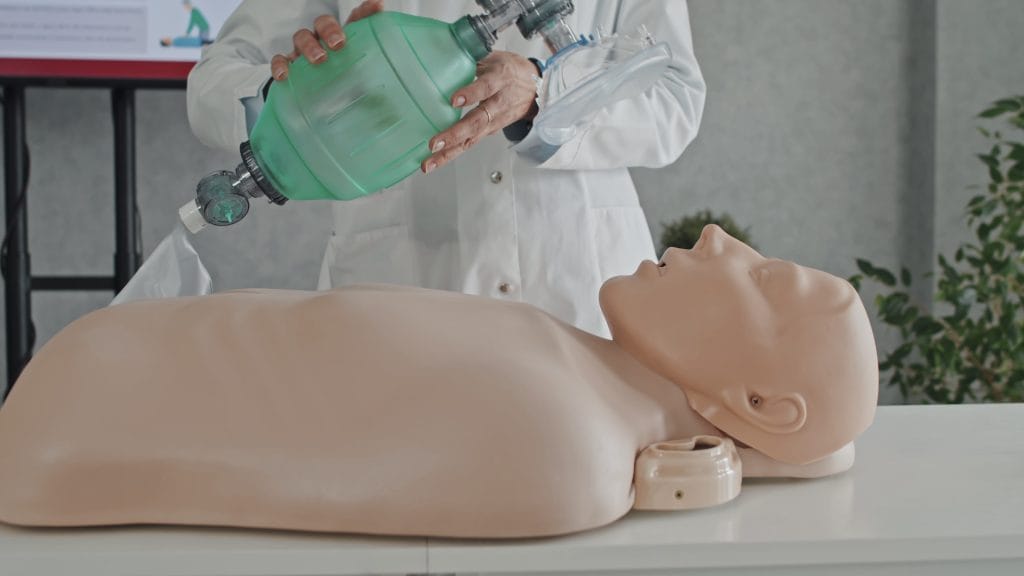
This course combines theoretical knowledge with practical skills training, including hands-on CPR and AED practice, airway management, and emergency response scenarios. Participants will also engage in scenario-based training to develop confidence in recognising and responding to medical emergencies. Participants are required to complete self-directed theoretical knowledge prior to the practical session.
By the end of the course, participants will be fully equipped to assess, manage, and provide effective life support in a variety of emergency situations, ensuring optimal patient outcomes until further medical help arrives.